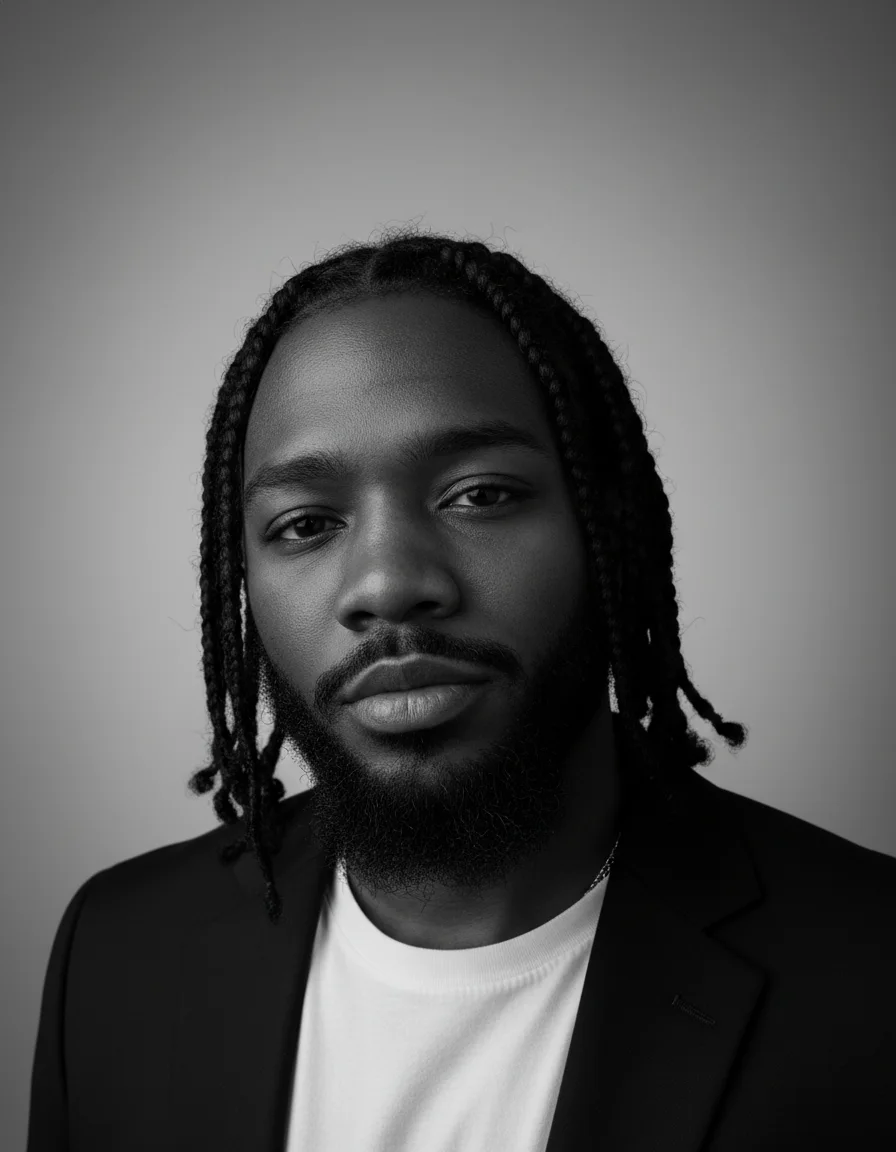
The Models · Milan Cheeks
Eight models. One direction.
Every model I have built, what it does, and the specific step it takes toward a Type I civilization. This is the index; the homepage timeline shows them in the order they were built.
Why Type I is the yardstick
The Kardashev scale measures a civilization by the energy it can harness. Type I means a planet's full energy budget, put to work. Humanity sits near 0.73. The gap is not only power generation; it is coordination. Energy without intelligence is wasted, and intelligence is the coordination layer. Each model below removes one bottleneck on that road: signaling, assistance, delegation, allocation, presence, and creation. That is the whole roadmap, and it is why the homepage meter reads the way it does.
Model 01
Harmony
Patent pending · USPTO Provisional 63/587,817
What it is
The media embed model. Harmony embeds signals directly into music, video, and ambient sound, and those signals trigger AI agents on any enabled device that hears them. Executions are logged and verified, and 69+ agents run in production. It is the media signal layer of SELF OS, built by SELF Labs.
The step toward Type I
Type I is a coordination problem before it is an energy problem: a planet of systems that can signal each other without new infrastructure. Harmony turns the media already flowing around the planet into that signaling layer. Every speaker becomes a node, and every song becomes a carrier. An open source version releases soon.
Model 02
AuRA
June 14, 2024
What it is
My first model: a personal AI assistant fine tuned from Mistral 7B with LoRA, built to integrate knowledge from multiple models, learn in real time, and grow toward a data broker and action model that does not just answer, it acts.
The step toward Type I
A Type I civilization multiplies what each person can do. AuRA is the per person multiplier: one human with a capable personal intelligence coordinates, creates, and executes at the level of a team. Multiply that by everyone and the planet's effective intelligence climbs without a single new power plant.
Model 03
AuRA-Instruct
June 18, 2024
What it is
The instruction tuned follow up to AuRA, built four days later to make the assistant follow directions reliably and hold a consistent standard across tasks.
The step toward Type I
Delegation is the trust layer of a planetary system. Instructions that are followed the same way every time are what let humans hand work to machines at scale, and scale of delegation is what separates a tool collection from a civilization scale system.
Model 04
Daam
July 14, 2025
What it is
A 2025 model in the research line. Its repository is private while the work continues.
The step toward Type I
Not every step is public. Daam is part of the compounding pipeline: each generation of models generates the data, the evaluations, and the lessons that train the next. The road to Type I is a pipeline, not a single breakthrough.
Model 05
Recommendation Engine
August 7, 2025
What it is
A 2025 model for recommendation: matching people to the right content, products, and next actions.
The step toward Type I
A planetary civilization runs on allocation: the right resource, the right information, and the right person finding each other without waste. Recommendation is allocation intelligence, and wasted motion is the tax that keeps civilizations below their ceiling.
Model 06
Frequency
August 14, 2025
What it is
A 2025 model in the signal and frequency line of research that also produced Harmony.
The step toward Type I
Type I means harnessing the energy of a planet, and energy is frequency. Work in the frequency domain, from signal embedding to sensing, is the research thread that connects media, devices, and eventually energy systems themselves.
Model 07
Anima
October 16, 2026
What it is
The flagship talking avatar model behind Role Model AI: a photoreal, real time conversational presence with a face, a voice, and memory, built for the people a human can never personally reach.
The step toward Type I
Presence is bandwidth. When one person's knowledge and likeness can be present in a million conversations at once, human expertise stops being scarce. A civilization where guidance, teaching, and care scale without limit is measurably closer to Type I.
Model 08
Genesis
November 12, 2026
What it is
The creation model inside Manifest Anything. Genesis 1.0 unifies the original Manifest creation stack (Clarifier, Reasoner, and Builder) with a larger reasoning core, 2.81 trillion parameters across the full system, and turns a sentence into a playable game. Genesis is also a simulation model: it simulates scenarios and environments to support predictive decisions, and it generates simulated worlds where robotics models train safely before they ever touch hardware. Genesis Edge, a small language model for the physical Manifest Console, is in development.
The step toward Type I
Simulation is foresight: a civilization that can model outcomes before committing energy and material wastes less of both, and robots trained in simulated worlds arrive in the physical one already competent. Creation is the final multiplier. When anyone can describe a world and play it, when software production stops being gated by scarce engineering hours, the productive capacity of the species jumps a level. Genesis is the step where the pipeline stops assisting creation and starts performing it.
The meter moves when the bottlenecks fall.
No single model makes a civilization Type I. A stack of them, compounding, each one teaching the next, is how the number moves. Follow the count on the homepage: it started with a patented signal layer and it currently ends with a model that creates worlds from sentences. The next entries are already in training.
See the Kardashev meter · See the timeline · Learn to train your own